What actually fails first on a Tulsa roof
Six places worth checking, and why none of them are visible from the ground.
September 17, 2026 · 3 min read
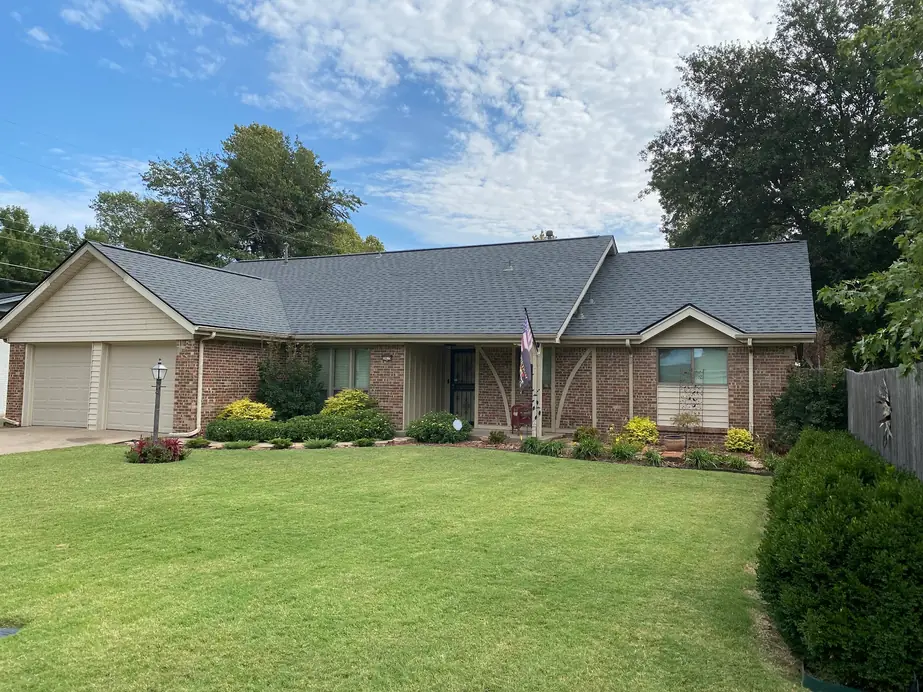
When people picture a roof failing, they picture a hole. In practice almost nothing fails in the middle of a slope. Roofs go at their edges and their joins, in the places where two things meet and where the wind gets purchase, and those are precisely the places a homeowner standing in the yard cannot see.
Here is the order we check them in, and what each one is doing.
Ridge cap
The ridge is the highest line on the roof and the cap is what seals it. Being highest means it catches more wind than anything else, and Oklahoma supplies plenty of wind. Cracked, lifted or missing ridge cap is the cheapest damage on this list to fix and the most expensive to ignore, because the ridge is an opening running the entire length of the house.
Valley flashing
A valley is where two roof planes meet, and it carries the water off both of them. That means the volume of water crossing a valley is far higher than anywhere else on the roof. If the flashing there is oxidised, too short, or was installed without enough overlap, the water finds its way under the shingles and then travels inside the wall cavity.
That last detail is why valley failures get discovered late. The water does not appear on a ceiling underneath the valley. It appears somewhere else entirely, weeks later, in a place that makes no obvious sense.
Exposed and backed out nail heads
Fasteners work loose over years of thermal movement. A nail that has backed out slightly lifts the shingle above it by a few millimetres, which is enough for the next storm to get underneath and peel it. It is also a direct penetration through the roof covering.
This one is genuinely invisible from the ground and is a good reason to have a roof looked at periodically rather than only after something dramatic happens.
The shingle field, after hail
Hail does its first damage to the mat of the shingle rather than the surface. A bruised shingle has lost structural integrity before it has visibly lost granules, so a roof can be genuinely compromised and still photograph well.
When we inspect after a storm we mark strikes across the slopes rather than sampling one area, because the distribution matters. Scattered strikes across every elevation tell a different story to concentrated damage on one face, and an adjuster will read those two situations differently.
Decking and sheathing
This is the layer nobody sees until the old roof comes off. Sheathing that has been quietly getting damp from a slow leak goes soft, and rafters can be damaged in ways that are not apparent from inside the attic.
It is the single strongest argument for a proper tear off rather than laying new material over old. Once the roof is stripped you can actually see what you are building on, and rotten decking and damaged rafters can be replaced before anything new goes down. Covering over it is cheaper on the day and considerably more expensive later.
Ventilation
A roof with no air moving under it cooks its own shingles from underneath. Attic temperatures in an Oklahoma summer are punishing, and without intake and exhaust working as a pair, that heat sits against the underside of the roof deck all day.
The result is shingles that age faster than they should and a roof that fails years before the material warranty suggested it would. Ventilation problems are also one of the few roofing issues you can sometimes sense from inside the house, in the form of an attic that is unreasonably hot or a top floor that will not hold temperature.
A replacement is the one realistic opportunity to correct ventilation properly, because the roof is already open. We treat it as part of the job rather than an upgrade.
And the gutter line
Not strictly the roof, but it fails at the same time and for the same reasons. Hail dents guttering while it is hitting the roof, and blocked or damaged guttering pushes water back against the fascia and the roof edge, which starts the cycle again from the bottom.
What to do with all this
Mostly, nothing, until something prompts it. Roofs are not delicate. But if you have had a significant storm, or if you have been told your roof is fine without anyone explaining which of these six things they looked at, it is worth a second opinion.
We inspect free across Tulsa and Green Country. Call (918) 508-1771 and we will come and read the roof in parts.
Driller Roofing & Construction, (918) 508-1771
Call (918) 508-1771More articles
Should you file an insurance claim after an Oklahoma hail storm?
The honest answer is not always, and knowing why will save you a claim you did not need to make.
What actually happens on the day your roof is replaced
Most homes are one to two days. Here is what those days look like.